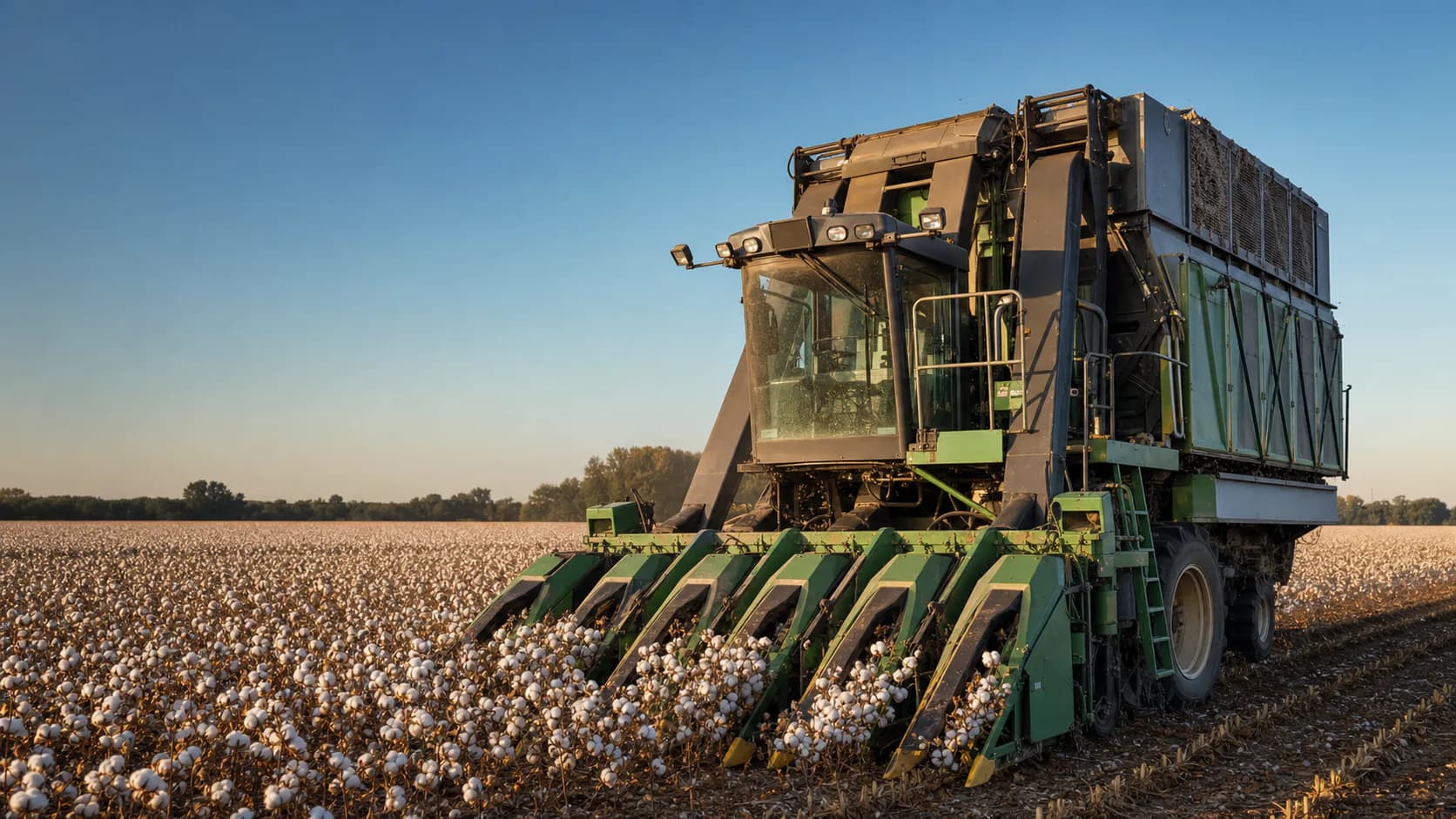
Quick checks before you begin
- Preserve the first evidence before cleaning, adjusting or replacing parts
- Map the symptom by row unit, drum, bar, height, time and field condition
- Compare an affected path with an unaffected path under the same operating conditions
- Separate field loss, plant trash, spindle twist and machine-sourced foreign material
- Inspect spindles, bushings, doffers, ribs, moistener delivery and drive condition as one system
- Segregate seed cotton that may contain oil, grease, polymer, plastic or metal fragments
- Make one authorized change at a time and verify the result on a controlled pass
Treat a quality signal as evidence, not a verdict
Cotton Incorporated identifies worn spindles, spindle bushings and doffers, poor doffer relationship and inadequate spindle cleaning among the possible causes of picking-efficiency loss. It also notes that adjustment and operation can affect lint quality and yield. The word possible matters: crop maturity, boll opening, moisture, field conditions, ground speed, row tracking and the handling system can create similar symptoms.
Begin with the observed output and its pattern. A row-specific increase in stalk cotton, repeated cotton on spindles, spindle twist, bark, leaf, cracked seed or foreign material is more useful than a general statement that the picker is doing a bad job. Do not assign a replacement part until the evidence chain is strong enough to separate machine wear from competing causes.
| Observed signal | Possible picking-system pathway | Competing evidence to record |
|---|---|---|
| Cotton left on stalks or ground | Spindle aggressiveness, spindle rotation, bushing condition, row-unit relationship or handling loss | Boll opening, crop condition, row tracking, speed and preharvest loss |
| Cotton remains or wraps on spindles | Doffer condition or relationship, spindle deposits, worn spindle surface or bar-height pattern | Crop moisture, green material, cleaner delivery and exact affected positions |
| Spindle twist in picked cotton | Incomplete doffing, spindle condition or unsuitable mechanical relationship | Crop and operating conditions plus where the twist first appears |
| More bark, leaf, burs or sticks | Damaged or missing ribs, row-unit condition or material-conveyance problem | Defoliation, plant condition, field debris and harvest timing |
| Oil, grease or dark residue | Leak, over-lubrication or buildup in the cotton path | Source location, smell, texture, affected quantity and maintenance event |
| Polymer, rubber-like or plastic fragments | Doffer contact or degradation, hose or seal damage, wrap or external foreign material | Fragment color, shape, location and source confirmation |
| Metal fragments, contact marks, heat or unusual noise | Loose rib, spindle or bar contact, failed rotation or drive damage | Stop condition, exact position, temperature evidence and loose components |
A worn-looking component near a quality problem is not automatically the root cause. Preserve the pattern, inspect the full system and use the current manual before adjustment or replacement.
Capture the baseline before the evidence is cleaned away
Cleaning is necessary for safe operation and inspection, but it can erase the first useful evidence. Before cleaning an isolated machine, photograph the affected row unit, spindle positions, doffer column, pads, ribs, cabinet, ducts and any residue or fragments. Record the field, crop condition, time, weather or moisture context, operator, speed setting and recent service work.
Keep the sample identity connected to the machine path. A handful of seed cotton without a row, time and location cannot show whether the material came from one row unit, the common conveyor, the basket or a later handling step.
| Baseline record | Minimum detail | Why it matters |
|---|---|---|
| Machine map | Machine, row unit, drum, bar, height and side where applicable | Prevents a whole-machine conclusion from one local symptom |
| Operating context | Field, pass, crop condition, time, speed and recent adjustment | Allows comparison under similar conditions |
| Visual evidence | Wide view, close view, scale reference and untouched residue | Preserves the original condition before cleaning |
| Seed-cotton sample | Sample ID, collection point, date, time and container | Connects foreign material or trash to a defined point |
| Loss check | Defined preharvest and post-harvest locations using one method | Separates picker loss from cotton already on the ground |
| Service history | Parts changed, lubrication, cleaner service, contact event and operator note | Exposes a change that may explain the pattern |
Trace the spindle and bushing pathway from plant contact to field loss
A picker spindle must engage seed cotton, rotate through the picking zone and carry the lock toward the doffer. Worn or damaged barbs, bent or non-rotating spindles, excessive movement at the spindle support or a repeated position pattern can reduce effective engagement or change the relationship with adjacent parts. The result may appear as cotton left on the plant, cotton dropped, deposits, wrap or inconsistent performance by height.
Do not diagnose remaining life from a photograph. Compare the same defined positions across affected and unaffected rows, inspect support movement and rotation under the authorized procedure, and apply only the wear and replacement criteria for the exact machine. A loose, hot, seized or contacting component requires qualified service, not a field trial.
| Spindle-system evidence | What it may support | What it does not prove |
|---|---|---|
| Rounded, damaged or inconsistent picking surface | Reduced or uneven engagement at that position | A universal replacement limit or material defect |
| One non-rotating or stiff spindle | Local spindle, nut, bushing, bar or drive investigation | That every spindle in the row has failed |
| Repeated movement at similar positions | Support or bar-pattern investigation | The acceptable movement without the service specification |
| Loss concentrated at one height or row | Position-related wear or mechanical relationship | That crop distribution and row tracking are excluded |
| Cotton retained on worn or dirty spindles | Combined spindle, doffer and moistener review | That adding cleaner or replacing one part will solve it |
Trace poor doffing before changing the doffer position
The doffer removes seed cotton from the spindle. Worn, hardened, torn or uneven lugs, an incorrect relationship to spindle position, bar-height variation or contact can leave cotton on the spindle. Cotton Incorporated and University of Georgia guidance connect poor doffing with spindle twist and lower harvesting efficiency.
A severely worn doffer can also reduce the space available for seed cotton to pass and may contribute to cracked seed. Contact or degradation can create doffer-material fragments. Lowering a doffer column without first finding the cause can accelerate wear of doffers, spindles and bushings. Use the current service procedure and confirm the actual system geometry; this guide provides no universal clearance.
- Map lug wear from top to bottom and side to side before moving the column.
- Look for polished bands, cuts, heat, fragments and matching spindle contact marks.
- Compare cotton retained on spindles at the same heights as the doffer pattern.
- Check whether one bar or repeated bar positions explain the damage.
- Preserve suspected doffer fragments and affected seed cotton separately for review.
- Confirm the approved doffer construction, column configuration and service criteria before ordering.
Continued operation can enlarge wear, create heat and introduce more foreign material. Isolate the machine and protect the affected seed cotton under the operation's safety and quality procedure.
Inspect ribs, picker bars and drive condition as part of the same pathway
Picker ribs help remove burs, sticks and leaf trash as seed cotton leaves the row. Cotton Incorporated notes that missing ribs can reduce this cleaning function, while loose or misshapen ribs may contact bars or spindles. Contact marks, metallic debris, heat or unusual noise therefore belong to both the safety investigation and the contamination investigation.
Picker bars and drive parts control where and how spindles move through the system. A repeated symptom at the same bar positions, irregular rotation or a timing concern should trigger a qualified inspection of the bar and drive path. Do not infer gear wear, timing or bar alignment from noise alone, and do not rotate or reach into an energized row unit.
| Area | Evidence to preserve | Required boundary |
|---|---|---|
| Ribs and fasteners | Missing, loose or distorted ribs, contact marks and retained trash | Use the exact mounting and clearance procedure |
| Picker bars | Repeated spindle pattern, visible damage, free movement and position map | Bar-height and alignment work requires qualified service |
| Drive gears and interfaces | Tooth damage, debris, irregular rotation, heat and event history | Do not run with suspected drive damage to prove the symptom |
| Cabinet and cotton path | Grease, trash, sticks, fragments and restriction points | Clean only after evidence and affected cotton are controlled |
| Air and handling path | Loss or buildup before and after shared conveyance points | A downstream symptom may not originate in the row unit |
Check the moistener chain without using more fluid as the first answer
The moistening system supplies approved cleaning solution to help remove plant gums and resins from spindles. Worn or damaged pads, blocked or uneven nozzles, restrictions, poor pad contact or inconsistent delivery can leave some spindles dirtier and harder to doff. A top-to-bottom or row-to-row pattern is more useful than a single wet or dry pad observation.
Too much solution is also not a neutral correction. Cotton Incorporated identifies excessive cleaner solution, damp seed cotton, green material, grease and trash buildup as contributors to sticking and row-unit choking, and notes that seed-cotton moisture can affect storage and quality. Use only the machine-approved solution and procedure, then verify delivery, pad condition and crop context together.
| Moistener evidence | Possible meaning | Do not assume |
|---|---|---|
| Dirty spindles at one height | Pad wear, contact or delivery difference at that height | That the entire pump system lacks pressure |
| Uneven pad wetting by row | Nozzle, restriction, distribution or pad-condition difference | That more total flow is the safe correction |
| Heavy gum or plant residue | Cleaning delivery, crop condition or delayed cleaning issue | That the spindle surface is the only cause |
| Sticky cabinets or repeated chokes | Excess solution, grease, moisture, trash or air-path restriction | That replacing doffers alone will restore flow |
| Green or damp material in seed cotton | Harvest timing and crop condition need review | That a machine adjustment can correct the crop state |
Separate plant trash from machine-sourced contamination
Cotton classification distinguishes leaf from extraneous matter. Cotton Incorporated lists examples of extraneous matter that include bark, grass, spindle twist, seed-coat fragments, dust, oil and plastic. The National Cotton Council's contamination guidance emphasizes preventing foreign materials from entering cotton across harvesting, handling and storage.
For troubleshooting, classify what was found before deciding where it came from. Plant trash may reflect crop, defoliation, ribs, row-unit cleaning or operation. Oil, grease, polymer fragments, plastic, paint or metal can indicate a machine, maintenance, field or handling source. Visual similarity is not source confirmation.
| Material class | Possible sources to investigate | Immediate evidence control |
|---|---|---|
| Leaf, bark, burs or sticks | Crop condition, defoliation, damaged ribs, row-unit setup or field debris | Compare rows and preserve a representative sample |
| Spindle twist | Poor doffing, spindle condition or mechanical relationship | Record row, position and when it first appears |
| Seed or seed-coat fragments | Crop condition, doffer passage, contact or downstream handling | Preserve fragments and avoid assigning one cause from appearance |
| Oil or grease | Leak, excess lubrication, contaminated cotton path or handling equipment | Stop the source, identify affected cotton and preserve residue |
| Polymer or rubber-like fragments | Doffer, seal, hose, belt, wrap or unrelated foreign material | Bag and label fragments; inspect matching machine surfaces |
| Plastic film or colored material | Module wrap, field material, clothing, covers or handling equipment | Segregate affected cotton and trace the handling event |
| Metal, paint or hard fragments | Contact, loose component, field object or handling damage | Stop for safety, retain the object and inspect the contact path |
Foreign material can be intermittent or concentrated. Define the sampled location and affected quantity, and use the operation's authorized quality process for disposition.
Contain suspect seed cotton before it is mixed with good cotton
If machine-sourced contamination is suspected, stop the source and identify the seed cotton collected since the last known acceptable condition. Keep it separate from unaffected cotton while the operation determines the scope. University of Georgia guidance specifically warns against mixing accumulated trash and low-quality fiber with good cotton.
The containment boundary depends on the machine path, time, module or basket sequence, transfers and evidence. Do not silently blend suspect material to make the symptom less visible. Record who placed the hold, the reason, quantity or module identity, storage location, samples and authorized disposition.
- Stop the affected row unit or machine under the approved procedure when safety or contamination risk requires it.
- Mark the last known acceptable point and the first suspect point using time, field, pass and module or basket identity.
- Segregate suspect seed cotton, fragments and replaced parts without cross-contamination.
- Inspect common conveyors and handling equipment before assuming the source is confined to one row.
- Notify the responsible farm, fleet, gin or quality contact using factual observations.
- Release, rework, divert or dispose only through authorized quality and commercial decisions.
Verify the correction with one controlled change at a time
After qualified inspection and an authorized repair, use a representative controlled pass to compare the affected and control paths. Keep crop, field area, operating conditions and observation method as consistent as practical. If several changes are made at once, the team may restore performance but still not know which condition caused the problem.
Cotton Incorporated publishes methods for estimating picker harvest loss. Use a defined local method that separates preharvest loss from post-harvest stalk and ground loss. Add row-unit observations, retained cotton, trash and contamination checks. Do not declare a fiber-grade improvement from a short field trial.
| Verification point | Before and after evidence | Decision boundary |
|---|---|---|
| Picking loss | Same defined preharvest and post-harvest sampling method | One pass does not establish seasonal performance |
| Cotton on spindles | Position-matched photos or counts after a comparable pass | Improvement does not prove remaining service life |
| Doffing pattern | Cotton retention and lug/contact pattern by height | Use manual criteria for adjustment acceptance |
| Trash and foreign material | Defined samples from comparable collection points | A visual check does not replace classing or laboratory analysis |
| Heat, noise and contact | No abnormal evidence under authorized observation | Stop if the symptom returns |
| Containment scope | Affected cotton identified and no new suspect material generated | Repair completion does not automatically release held cotton |
A repair is verified when the defined symptom, machine evidence and contamination control all reach an acceptable state under the authorized procedure, not merely when a new part has been installed.
Use gin and classing feedback without overclaiming the machine diagnosis
Harvesting and ginning both influence the foreign matter that remains in lint. Cotton Incorporated explains that leaf content is affected by variety, harvesting method and conditions, while the cleaning and drying system also affects what remains after ginning. The Cotton Ginners Handbook likewise stresses setup and maintenance for harvesting efficiency, productivity and fiber quality.
Connect available module, gin, classing, HVI, AFIS, complaint or contamination reports to the machine and harvest records, but keep the inference limited. A field repair cannot guarantee color, leaf, trash, neps, strength, length, bale value or mill acceptance because many crop, weather, storage and gin variables remain.
| Evidence source | Useful relationship | Unsafe conclusion |
|---|---|---|
| Field loss sample | Picker efficiency pattern at a defined place and time | Final lint yield or grade for the whole field |
| Seed-cotton sample | Trash or foreign material at a defined machine point | Bale contamination level without representative sampling |
| Gin feedback | Material and handling observations tied to module identity | One row-unit component is proven defective |
| Classing or HVI result | Standardized bale-level quality information | A single machine part caused every result |
| AFIS or laboratory result | Detailed fiber and foreign-matter data for the tested sample | Untested modules have the same result |
| Customer complaint | Commercial symptom, shipment and lot evidence | The farm or supplier is at fault before investigation |
Build the repair decision from system evidence
The decision may be to clean, adjust, repair, replace, monitor or investigate another cause. Match the action to a documented condition and an authorized criterion. Do not replace every visible part merely because one row produced poor cotton, and do not keep a worn part in service only because the machine still runs.
Record the removed part identity and position, replacement part and lot, measurements or observations, adjustment authority, affected cotton, verification result and follow-up. This record helps the buyer distinguish a repeat product problem from installation, system, crop or operating conditions.
| Decision | Evidence needed | Follow-up |
|---|---|---|
| Clean and reinspect | Deposits or buildup with no prohibited damage | Preserve before evidence and confirm the symptom after cleaning |
| Authorized adjustment | Measured or mapped relationship outside the current procedure | Record setting method and verify contact, heat and output |
| Replace a component | Condition or performance fails the approved criterion | Retain identity, position, part lot and removed sample where needed |
| Expand to a column, bar or row | Repeated pattern supports a wider scope | Do not assume the same scope across the whole machine |
| Investigate crop or operation | Machine checks do not explain the pattern or control rows match | Record harvest timing, moisture, speed and plant condition |
| Contain and escalate | Foreign material, leak, contact, heat or unexplained fragments | Protect cotton and obtain qualified technical and quality review |
Send the supplier a symptom package, not only a part name
A supplier can review a replacement request more reliably when the symptom, machine context and evidence arrive together. State whether the request is for an exact replacement, an investigation sample, a trial quantity or a broader service package. Keep the installed reference and supply form separate from the suspected cause.
YUCHENG HARVEST can review product identity and quotation evidence, but the machine owner or qualified service organization remains responsible for diagnosis, adjustment, installation, harvest operation and cotton disposition.
- Machine family and available model, serial, row-unit and installed-reference evidence.
- Affected row, drum, bar, height, direction and whether the symptom follows a repeated position.
- Clear photographs of the untouched condition, cleaned component, removed part and comparison row.
- Observed loss, retained cotton, spindle twist, trash, residue, fragments, heat, noise or contact.
- Crop, field, moisture or weather context, speed setting and recent service event.
- Requested bare part or assembly, quantity, destination, required date and trial or full-order scope.
- Available measurements, current manual criteria, sample identity and required quality documents.
A correctly identified replacement part does not by itself prove the diagnosed cause. Confirm the part against the machine, and confirm the repair through the controlled verification plan.
Technical basis for this article
The article paraphrases and organizes the sources below. It does not copy a service manual, and it does not replace the current documentation for the exact machine.
- The Spindle-Type Cotton Harvester: The Need for an Expert OperatorCotton Incorporated | technical guideOpen source
- Preseason Procedures for Spindle-Type Cotton HarvestersCotton Incorporated | technical guideOpen source
- In-Season Procedures for Spindle-Type Cotton HarvestersCotton Incorporated | technical guideOpen source
- Classification of Upland CottonCotton Incorporated | technical guideOpen source
- Contamination Prevention GuidelinesNational Cotton Council of America | technical guideOpen source
- Georgia Cotton Production Guide: HarvestingUniversity of Georgia Cooperative Extension | extension publicationOpen source
- Cotton Ginners Handbook: HarvestingUSDA Agricultural Research Service and Journal of Cotton Science | technical guideOpen source
- Spindle Picker Harvesting technical guideOklahoma State University Extension document library | extension publicationOpen source
- Cotton picker parts inquiry data standardYUCHENG HARVEST | internal standardOpen workflow
Questions buyers and technicians ask
Can worn cotton picker spindles reduce harvest quality?
They can contribute to picking loss, inconsistent engagement, retained cotton or a wider doffing and cleaning problem. The observed pattern must still be separated from crop maturity, moisture, row tracking, speed, doffers, bushings, moistener delivery and handling losses.
Is spindle twist proof that the doffers are worn?
No. Poor doffing is a recognized pathway to spindle twist, but doffer position, spindle condition, bar-height pattern, deposits, crop condition and operating context also require review.
Can worn doffers contaminate cotton?
Doffer degradation or contact can create fragments, and severe wear can affect how seed cotton passes the doffer. Preserve any fragments, inspect for matching damage and stop the source rather than identifying the material from appearance alone.
Does installing new parts guarantee better cotton grade?
No. A controlled repair may improve a defined machine symptom, but cotton grade also depends on variety, crop condition, weather, harvest timing, moisture, storage, ginning and sampling.
Should the whole doffer column or every spindle be replaced when one position is worn?
Not automatically. Map the wear and performance pattern, use the exact machine criteria and expand the repair scope only when the evidence supports a column, bar, row or machine-level action.
Can a field sample predict HVI or AFIS results?
No. A controlled field sample can document a machine-point condition, but HVI, AFIS and classing results depend on defined samples and processes. Do not convert a visual observation into a grade prediction.
What contamination signs require immediate attention?
Oil, grease, polymer or plastic fragments, metal, paint, unexplained hard objects, active leaks, contact marks, heat and unusual noise require prompt containment and qualified review under the operation's safety and quality procedure.
What information should be sent with a replacement-parts inquiry?
Send the installed reference, machine and row-unit context, exact position, part form, symptom map, untouched and cleaned photos, available measurements, removed sample identity, quantity, destination and required date.