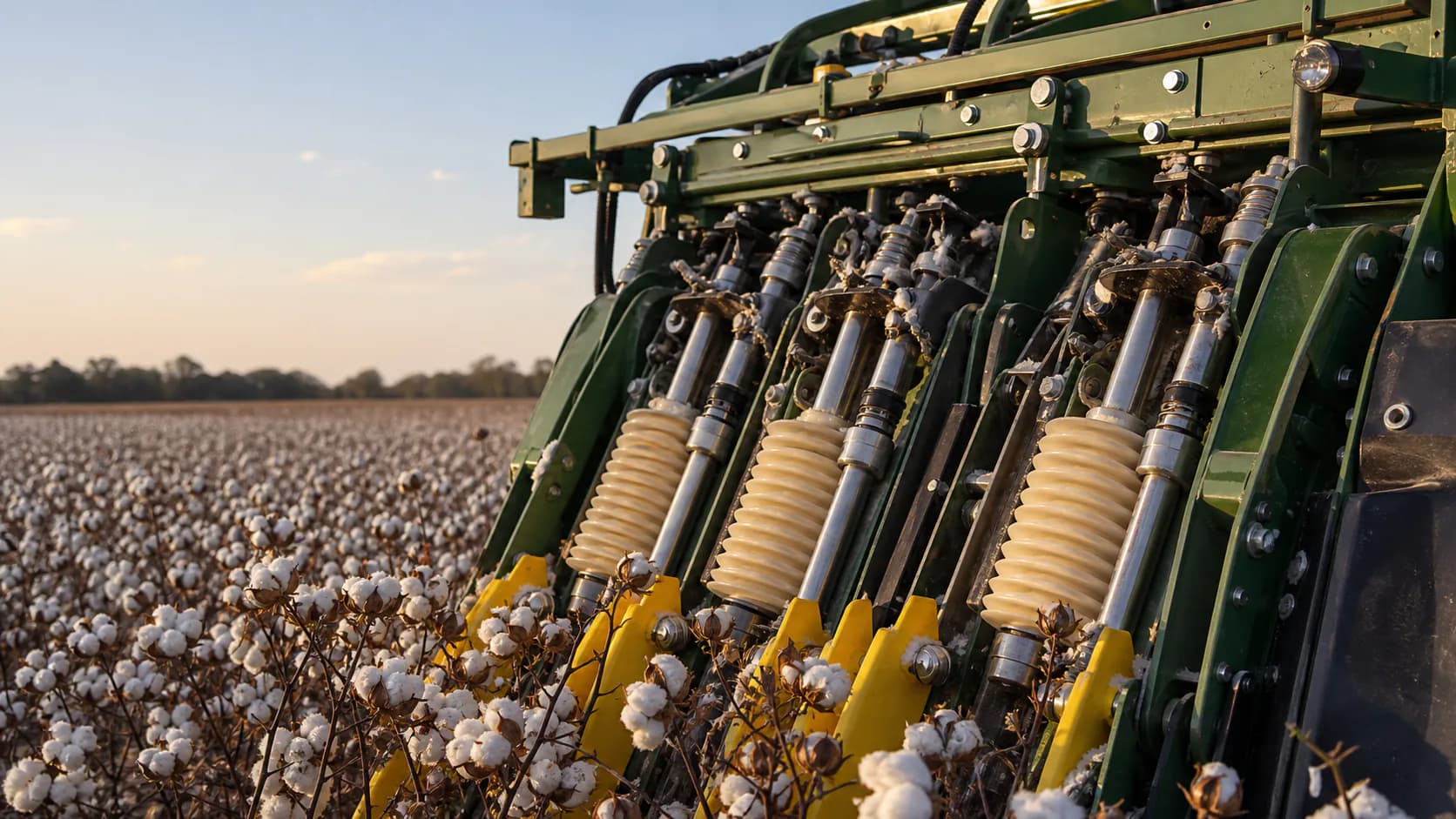
Quick checks before you begin
- Stop safely and record whether the symptom affects one row or all rows
- Inspect spindle deposits, damage and rotation
- Inspect doffer lug condition before changing position
- Confirm moistener spray, pads, filters and cleaner mixture under the manual
Define where and when the wrapping occurs
Start with location and timing. Record the row, drum, picker bar and spindle height where cotton first accumulates. Note whether the problem begins at startup, after the machine warms, under humid conditions or only in a particular part of the field.
A one-row problem and a whole-machine problem do not have the same likely causes. Comparing an affected row with a normal row is more useful than replacing the most visible part immediately.
Follow a system sequence
- Document crop moisture, ambient conditions and the exact affected positions.
- Inspect spindles for packed barbs, damage, deposits and abnormal rotation.
- Inspect doffer lugs for rounded, broken, torn or hardened edges and compare column wear.
- Verify moistener tank, strainers, nozzles, spray pattern and pad wetting under the current manual.
- Check for contact marks, abnormal heat, noise or row-unit plugging before changing adjustments.
Match the observation to the next check
| Observation | Next area to inspect | Evidence to save |
|---|---|---|
| One row only | Row-specific doffer, moistener and bar condition | Side-by-side photos with a normal row |
| Lower spindle group | Wear map, pad contact and crop entry zone | Vertical position map |
| Several rows after time | Cleaner delivery, filters, nozzles and operating conditions | Time, humidity and mixture record |
| With noise or heat | Contact, bearing, bushing or drive condition | Stop time, location and temperature evidence |
Avoid the adjustment shortcut
Doffers remove cotton from the spindles, while the moistening system helps remove plant gums and resins. A visible wrapping symptom can involve either system as well as spindle wear or crop conditions.
Do not lower the doffer column simply to make the symptom disappear. Technical guidance warns that the cause of poor doffing should be determined first because an unnecessary adjustment can increase wear or contact risk.
This guide helps organize diagnosis. It does not replace model-specific service values, lockout steps or qualified technical judgment.
Technical basis for this article
The article paraphrases and organizes the sources below. It does not copy a service manual, and it does not replace the current documentation for the exact machine.
- Preseason Procedures for Spindle-Type Cotton HarvestersCotton Incorporated | technical guideOpen source
- In-Season Procedures for Spindle-Type Cotton HarvestersCotton Incorporated | technical guideOpen source
- Spindle Picker Harvesting technical guideOklahoma State University Extension document library | extension publicationOpen source
Questions buyers and technicians ask
Does cotton wrapping always mean the spindle is worn out?
No. Spindle condition is one possibility, but doffer condition, moistener delivery, deposits, crop moisture and row-unit condition can produce a similar symptom.
Should the doffer be lowered first?
No. Identify the cause and consult the current model manual before changing the doffer position.
What evidence is most useful for remote review?
Send row and position mapping, close photos of spindles and doffers, moistener spray evidence, machine details and the operating conditions when the symptom occurs.