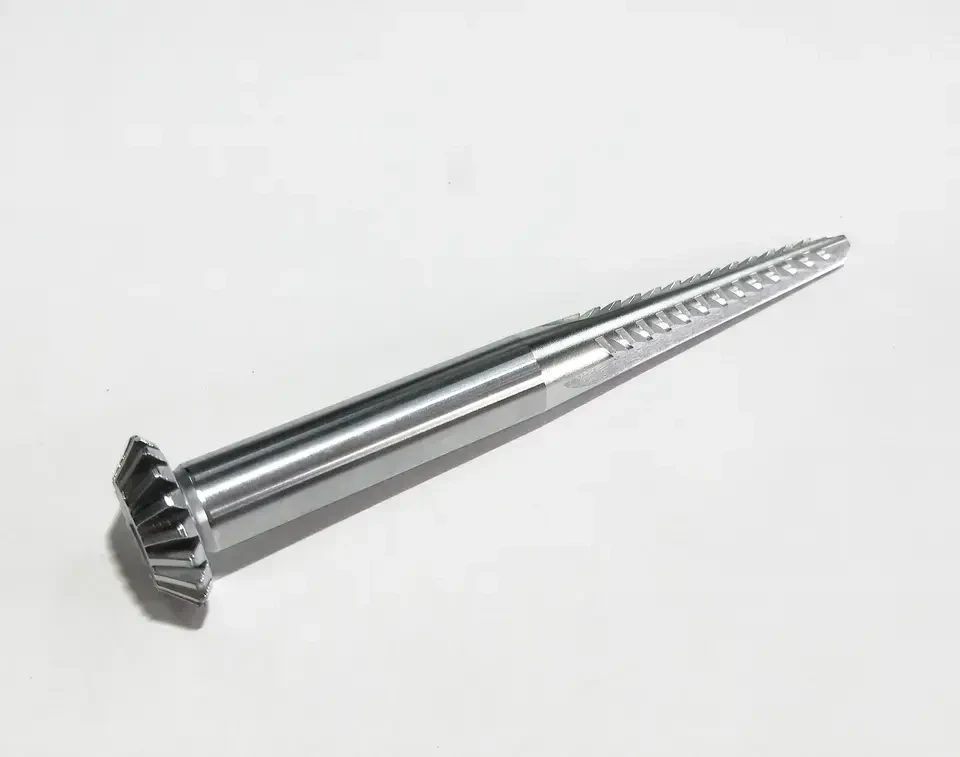
Quick checks before you begin
- Record every visible number exactly
- Photograph both ends, the barb area and the full spindle
- State machine brand, model, year and row-unit position
- Keep left-hand and right-hand samples in separate labeled bags
Start with the reference number, not the visual match
A spindle can look similar to another part while differing in hand, thread, shank geometry or application. Treat a visible reference number as the first locator, then confirm it against the physical part and machine context.
If the number is incomplete, do not guess the missing characters. Send a focused photo under side light and record the characters that are certain.
Technical harvester guidance warns that the correct left-hand or right-hand spindle must match the nut thread and drum. A visual comparison alone is not enough.
Build a photo set that a supplier can review
- One full-length photo beside a ruler or scale
- A close view of the threaded or drive end
- A close view of the pointed end and barb condition
- A straight-on end view to show diameter and profile
- The removed position on the row unit, if it is safe to photograph
- The package, service note or parts-book page when available
Record the minimum fitment fields
| Field | What to record | Why it matters |
|---|---|---|
| Machine | Brand, model, year and serial range if known | Narrows the parts-book context |
| Row unit | Row number, drum and spindle position | Shows where the sample came from |
| Direction | LH or RH marking; do not infer from a loose sample | Prevents thread and drum mismatch |
| Reference | Exact stamped or packaged number | Creates a traceable comparison |
| Sample | One retained original part | Allows final dimension and thread confirmation |
Ask for a controlled supplier confirmation
A useful quotation should repeat the reference supplied by the buyer, identify what remains unconfirmed and state what evidence will be checked before production. For a first order, request a sample comparison or a documented dimension check before approving quantity production.
Trademarked machine names and reference numbers identify intended fitment only. They do not by themselves prove authorization, origin or interchangeability.
Technical basis for this article
The article paraphrases and organizes the sources below. It does not copy a service manual, and it does not replace the current documentation for the exact machine.
- Preseason Procedures for Spindle-Type Cotton HarvestersCotton Incorporated | technical guideOpen source
- Spindle Picker Harvesting technical guideOklahoma State University Extension document library | extension publicationOpen source
- Cotton picker parts inquiry data standardYUCHENG HARVEST | internal standardRead the guide
Questions buyers and technicians ask
Can a spindle be identified from one photo?
Usually not with enough confidence for an order. A useful review needs the reference, hand, machine context and several views or a retained sample.
Why must left-hand and right-hand spindles be separated?
The spindle hand and thread must correspond with the drum and retaining hardware. Mixing records creates a high fitment risk.
What should I send when there is no part number?
Send the machine and row-unit details, a complete photo set, the removed position and a physical sample if possible.