Quick checks before you begin
- Park and isolate under the approved procedure
- Inspect lint and trash accumulation
- Look for heat, leaks and contact
- Record completion and unresolved findings
Why cleaning is a performance and safety task
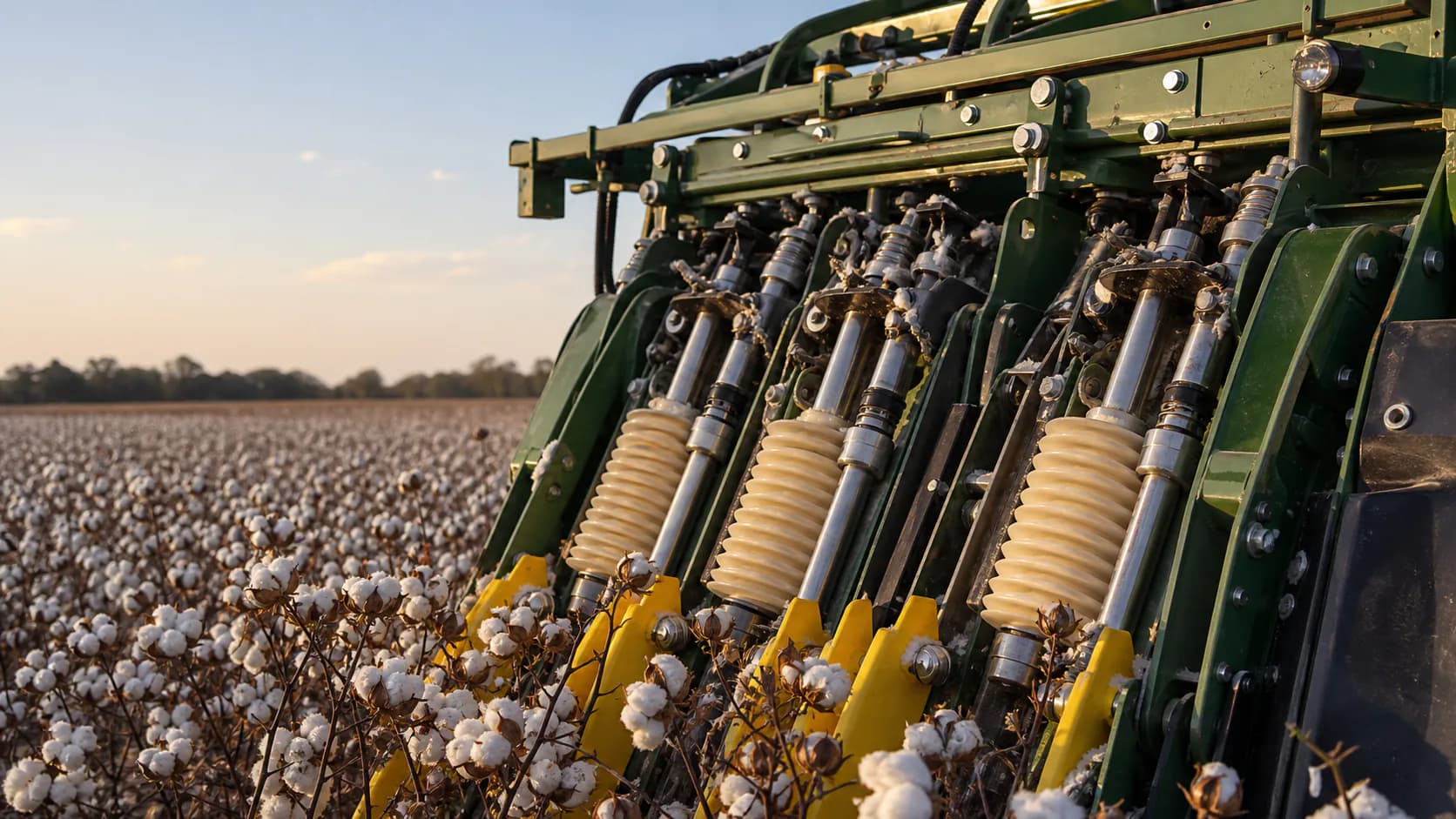
In-season technical guidance identifies lint and trash accumulation, metal contact, row-unit choking and poor cleaning as contributors to harvester fire risk. Daily or nightly cleaning also supports consistent machine performance.
The cleaning method must follow the manufacturer and site procedure. High-pressure air or water can injure people or damage components, and compressed air must never be used to blow dust from a person.
Daily inspection record
| Zone | Look for | Record |
|---|---|---|
| Row units | Lint, trash, plugging, deposits and contact marks | Rows cleaned and exceptions |
| Drive/rotating zones | Heat, noise, leakage and wrapped material | Location and stop action |
| Engine/exhaust area | Combustible accumulation and hot surfaces | Cleaning and inspection result |
| Electrical/hydraulic | Damaged routing, leakage or overheated area | Escalation and isolation |
| Fire equipment | Presence, access and inspection status | Crew handover |
Control the cleaning method
- Wear the PPE required by the cleaning method and site risk assessment.
- Respect hot surfaces, stored pressure and moving-component hazards.
- Protect bearings, seals, sensors and electrical components from damaging pressure or water entry.
- Do not direct compressed air toward skin, clothing or another person.
- Keep removed lint and trash away from ignition sources and work areas.
Cleaning does not correct a mechanical cause. Escalate abnormal heat, metal contact, repeated plugging or leakage before returning the machine to service.
Make shift handover specific
Record who cleaned and inspected the machine, when it was completed and which zones could not be cleared or checked. A verbal 'all good' is not enough when the next crew needs to monitor a hot spot, repeated choke or damaged guard.
Technical basis for this article
The article paraphrases and organizes the sources below. It does not copy a service manual, and it does not replace the current documentation for the exact machine.
- In-Season Procedures for Spindle-Type Cotton HarvestersCotton Incorporated | technical guideOpen source
Questions buyers and technicians ask
How often should a cotton picker be cleaned?
Technical guidance supports daily or nightly cleaning during harvest, with additional attention when conditions or accumulation require it. Follow the manufacturer and site plan.
Can compressed air be used?
Only under an approved procedure with suitable PPE, pressure control and component protection. Never use it to clean a person.
Does removing lint eliminate fire risk?
No. It reduces one contributor, but heat, contact, leakage, electrical faults and operating conditions still require inspection and control.