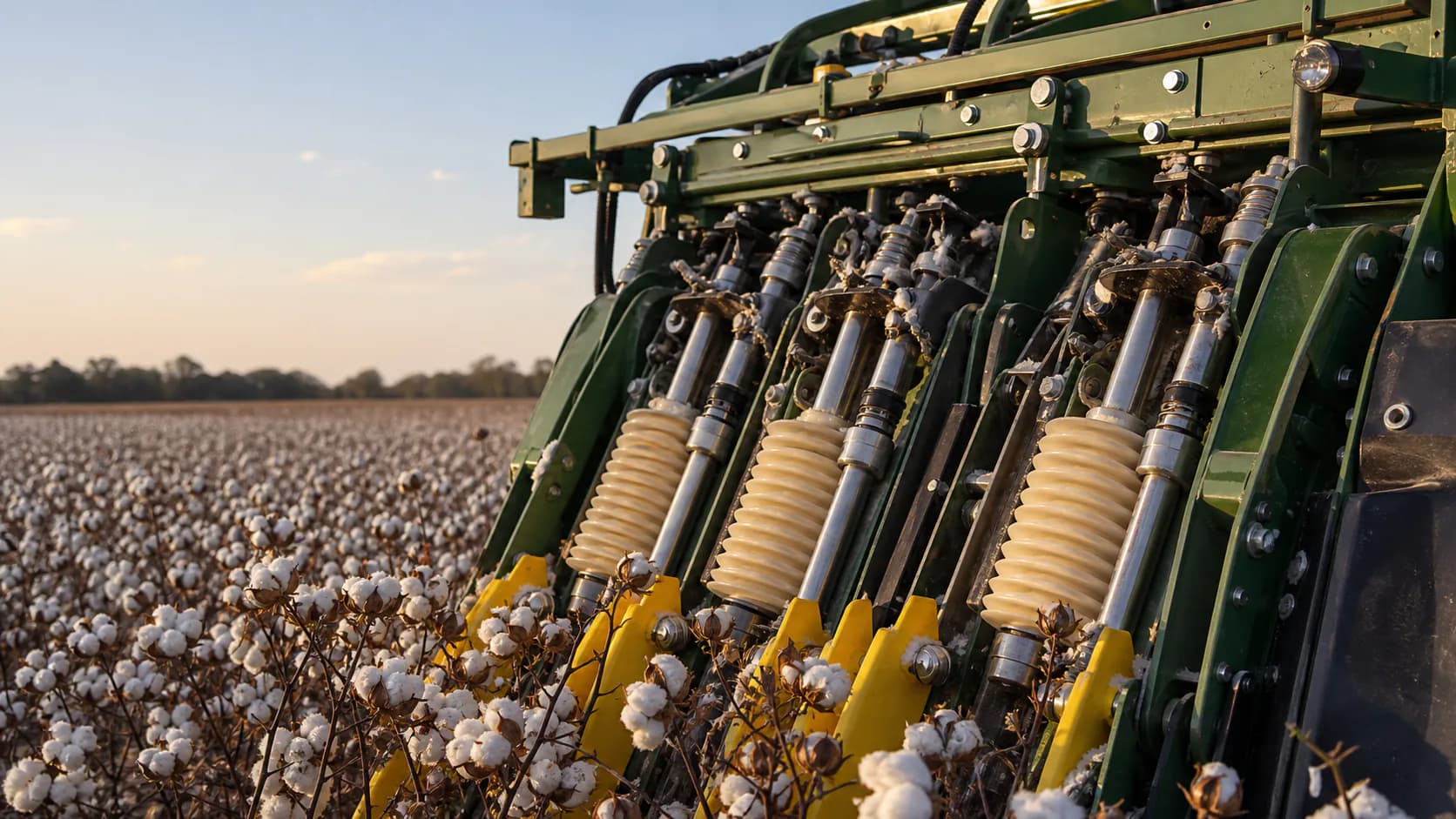
Quick checks before you begin
- Confirm fluid level and approved mixture
- Compare spray pattern row by row
- Inspect strainers, hoses and nozzles
- Check pad wetting after flow evidence is recorded
Use a normal row as the control
Record the affected row and select an adjacent row that is operating normally. Compare the same points in the same order. This reduces guesswork because supply condition, weather and cleaner mixture are shared.
Check the flow path in sequence
- Confirm the tank level and approved mixture record.
- Inspect the main and row-specific strainers or filters.
- Check hoses for kinks, damage, leakage or routing differences.
- Compare nozzle condition and spray pattern under the approved safe procedure.
- Compare pad wetting and the resulting spindle cleanliness.
Interpret where the difference first appears
| First difference | Likely inspection zone | Do not conclude yet |
|---|---|---|
| Before row branches | Main supply, pump or filter | That every nozzle is good |
| At one row line | Row hose, restriction or leakage | That the pad is defective |
| At nozzle pattern | Nozzle contamination or damage | That pressure must be increased |
| Only at pad contact | Pad condition, holder or position | That fluid delivery is the only cause |
Verify one correction at a time
After a qualified correction, repeat the same comparison and save the result. Multiple simultaneous changes may restore operation but erase the evidence needed to prevent recurrence.
Technical basis for this article
The article paraphrases and organizes the sources below. It does not copy a service manual, and it does not replace the current documentation for the exact machine.
- Preseason Procedures for Spindle-Type Cotton HarvestersCotton Incorporated | technical guideOpen source
- In-Season Procedures for Spindle-Type Cotton HarvestersCotton Incorporated | technical guideOpen source
Questions buyers and technicians ask
Should pressure be increased when one row is dry?
Not as a first response. A local restriction, hose, nozzle or pad issue should be isolated before any model-approved pressure adjustment.
What if every row has weak flow?
Shift the inspection upstream toward tank level, pump operation, main filters and the system procedure.
Why record spray pattern before cleaning a nozzle?
The before condition helps confirm whether nozzle contamination caused the row difference and supports recurrence tracking.